

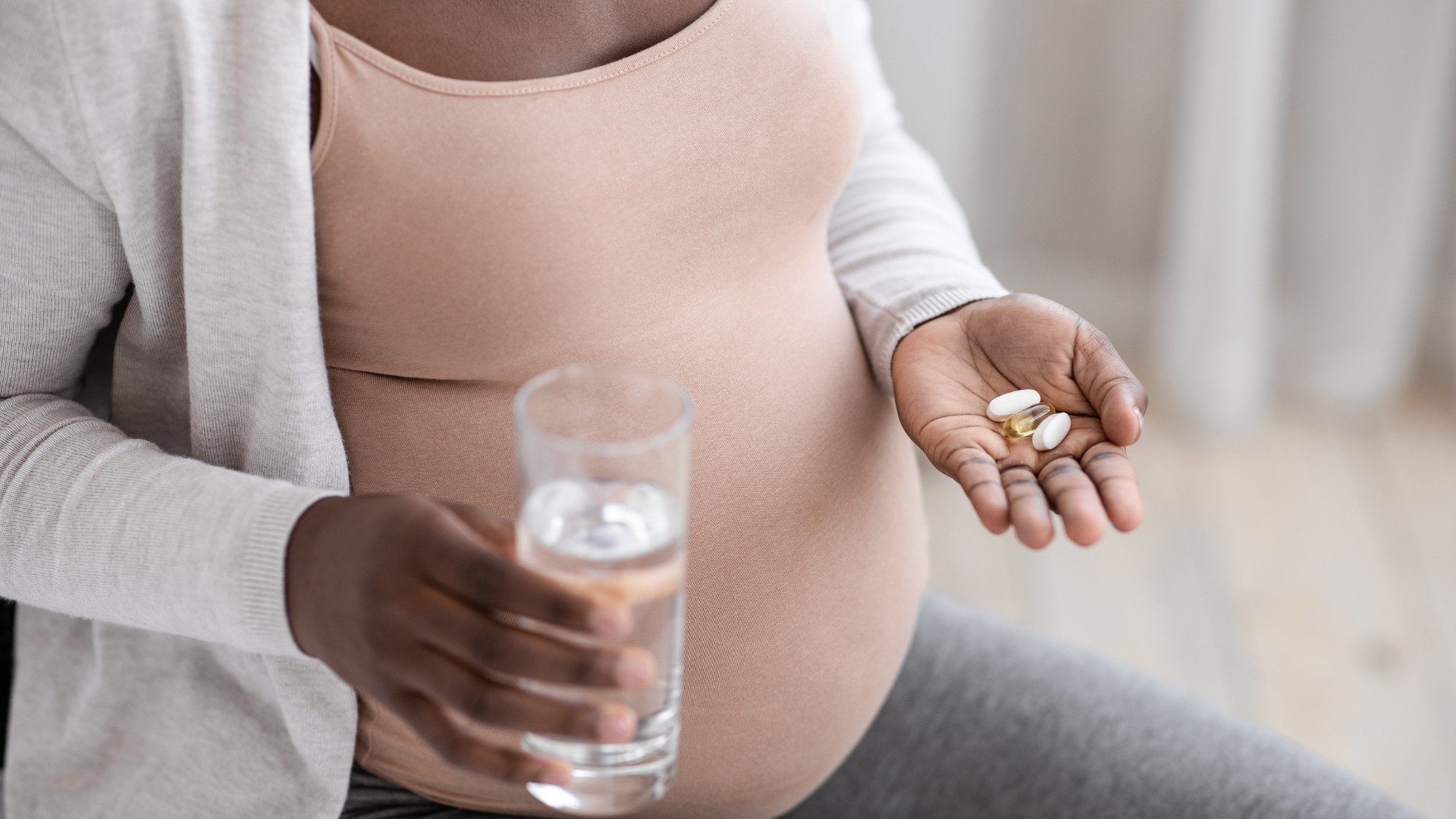
Prenatal Vitamins: What Should You Look For?
September 10, 2026
Walk down the prenatal vitamin aisle and it can feel overwhelming fast: dozens of brands, gummies versus capsules, and labels packed with nutrients you may not recognize. So, what actually matters?
According to the National Institutes of Health (NIH) Office of Dietary Supplements, certain nutrients are especially important during pregnancy, including folate/folic acid, iron, iodine, vitamin D, and choline. Here’s what the research says about each one, and why it’s worth checking the label for it.
Folate & Folic Acid
Folate is a B vitamin your body needs to make DNA and support healthy cell division. According to the NIH, taking folic acid before becoming pregnant and during early pregnancy helps prevent neural tube defects, serious birth defects of the brain and spine.
The NIH recommends that pregnant women get 600 mcg DFE (dietary folate equivalents) daily. Because neural tube defects can develop before many people know they’re pregnant, the NIH also recommends that all women who could become pregnant get at least 400 mcg of folic acid daily from supplements, fortified foods, or both.
Iron
Iron helps your body make hemoglobin, the protein in red blood cells that carries oxygen throughout your body. During pregnancy, your blood volume increases significantly, which means your iron needs go up too.
The NIH recommends 27 mg of iron daily during pregnancy, more than triple the amount needed by adult women who aren’t pregnant. Getting too little iron increases the risk of iron deficiency anemia, and the NIH notes it can also raise a baby’s risk of low birth weight and premature birth.
Iodine
Iodine helps your body produce thyroid hormones, which support metabolism and are essential for proper bone and brain development during pregnancy and infancy.
According to the NIH, pregnant women need about 50% more iodine than usual, 220 mcg daily, to support their baby’s development. This one is worth double-checking: the NIH notes that only about half of prenatal multivitamins sold in the United States actually contain iodine, so it’s not a given that your prenatal covers this need.
Vitamin D
Vitamin D helps your body absorb calcium, supporting strong bones for you and your baby. It also plays a role in muscle function, nerve signaling, and immune health.
The NIH recommends 15 mcg (600 IU) of vitamin D daily during pregnancy. Because very few foods naturally contain vitamin D, a prenatal vitamin can help fill the gap alongside fortified foods like milk.
Choline
Choline supports fetal brain development and helps your body build healthy cell membranes. The NIH specifically identifies pregnant women as a group at higher risk of not getting enough choline through diet alone.
The recommended amount during pregnancy is 450 mg daily. Choline isn’t included in every prenatal vitamin, so it’s worth checking the label if this is a nutrient you’re hoping to prioritize.
A Note on Individual Needs
Your individual needs may vary based on your health history, diet, and how your pregnancy is progressing. It’s always best to talk with your healthcare provider about which prenatal vitamin is right for you. This post is meant to help you understand what to look for, not to replace guidance from your OB or midwife.
We’re Here to Support You, Too
If you’re pregnant or think you might be, our team in Drexel Hill and Norristown, PA is here to help you find your footing, from confirming a pregnancy to connecting you with community resources.
We offer:
- Free pregnancy testing
- Limited obstetric ultrasounds
- Parenting education
- Community referrals and resources
📞 Call us at 610.622.9957
📧 Email: info@amnion.org
📍 Visit our Drexel Hill or Norristown, PA location, or schedule a free appointment on our website: amnionpregnancycenter.com
Source: NIH Office of Dietary Supplements fact sheets on Folate, Iron, Iodine, Vitamin D, and Choline.
Don’t live near our centers? Find a Pregnancy Resource Center near you: Care Net